What Keeps Elk Rock Garden Free Is Happening Inside the Kerr Manor
October 29, 2026
October 29, 2026
On Aug. 31, the National Park Service accepted the nomination of the Peter and Laurie King Kerr Estate to the National Register of Historic Places. Most people know the estate as Elk Rock Garden, or by its old name, the Bishop's Close. The Oregonian/OregonLive reported that the listing carries legal weight. In Oregon, local governments must review any proposal to demolish or relocate a listed property.
That protects the garden on paper. Paying for its upkeep is a separate problem. Elk Rock Garden has charged no admission since 1959, so the foundation that owns it relies on donors for every repair. Over the past year, its answer has taken shape inside the 1910s manor house at the top of the lawn. The upper floors have been restored and rented to like-minded nonprofits, and those rents are part of how a free public garden on Military Lane pays its way.
Historian Eileen Fitzsimons, who once worked as an assistant gardener at the Bishop's Close, wrote the nomination. She described Elk Rock as one of the few Portland-area private gardens from the late 19th and early 20th centuries that has kept much of its original scale, setting and design unity. Peter Kerr worked on the garden from 1897 until his death in 1957. Along the way he drew on ideas from landscape architect John C. Olmsted. When Olmsted visited in 1910, he suggested letting the natural topography guide the garden and making a new house its centerpiece.
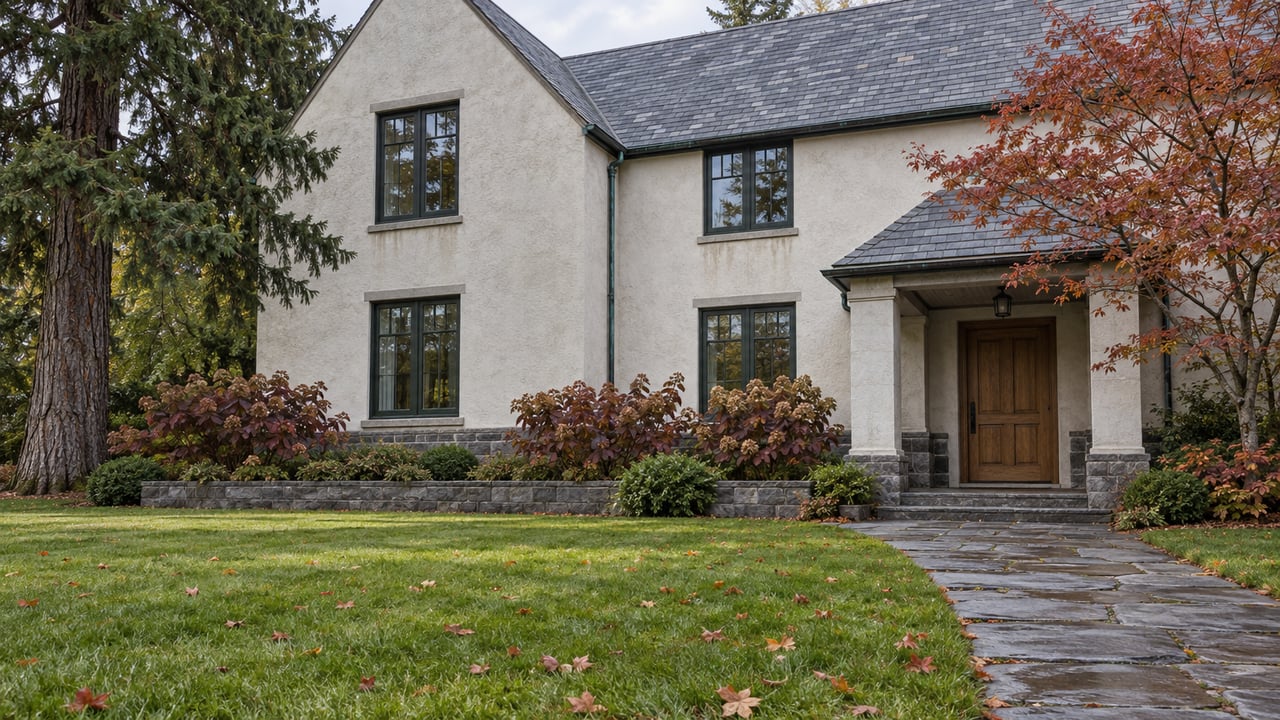
That house matters to everything that follows. Around 1914 the Kerrs hired Ellis F. Lawrence, the founding dean of the University of Oregon's architecture department, to design a Scottish-style manor of almost 10,000 square feet. OregonLive reported in 2025 that most of the floor plan, millwork and stucco exterior are still original.
The Kerr family's daughters gave the estate to the Episcopal Diocese of Oregon on the condition that the public could keep visiting. In July 2023 the Elk Rock Garden Foundation bought the property from the diocese, with support from Kerr's great-grandchildren Peter Platt and Nancy Truszkowski. Owning a free garden also means owning a large, century-old house with century-old wiring.
The foundation started its Preservation Fund in September 2025. Work inside the manor began that November, covering plumbing, wiring, insulation, HVAC and extensive asbestos abatement. By this spring, the entire second floor and part of the third had been fully restored. The work included lead abatement, plaster repair, remodeled bathrooms, restored wooden windows, and new heating, cooling and lighting.
The foundation says plainly what the restoration was for. The finished rooms let it bring in new tenants, which it calls "an important step toward the garden's long-term financial sustainability." Today the manor houses three organizations:
There is room for one or two more tenants. Because of the foundation's nonprofit status, it can rent only to other nonprofits, and it is looking for groups that work on gardening, horticulture, pollinators, climate adaptation, or conservation and preservation. Rent starts at $600 a month. That includes an office, a parking space, kitchen access, utilities, Wi-Fi, shared meeting space, and unlimited access to the garden.
OregonLive quoted Platt calling the estate "an artifact of the last Gilded Age" that was built for private enjoyment and given for public use. In his words, a place where nonprofits work and raise funds together is "a worthy legacy."
The biggest projects happened indoors, but a good deal of work also happened outside, much of it along routes regular visitors walk. The foundation's Preservation Month update lists the wall, step, wisteria and ramp projects. The stream and oak work came through the University of Oregon's Field School and through volunteer arborists.
The oak work had a particular urgency. The garden served as a Mediterranean oak borer monitoring site with the West Multnomah Soil and Water Conservation District for 14 weeks. In the final week, one beetle turned up in a trap.
The house got craft attention too. Stained-glass artist David Schlicker led Field School students in rebuilding a damaged leaded glass window and stabilizing the leading in the back door and chapel windows. Al Williams, formerly of the National Park Service's Western Center for Historic Preservation, guided repairs to the front entry columns and chapel windows.
The foundation's list of remaining projects shows how much the house income and donations still have to carry.
| Building | Grounds |
|---|---|
| Roof repair | Footbridge rebuild |
| Exterior trim paint | Patio repairs |
| Kitchen improvements | Pavement and brick path repairs |
| Chapel upgrades | New exterior benches |
| Wood floor refinishing | Safety railings |
| Visitor center repairs | Public restrooms |
Public restrooms come last on that list, and their absence still shapes every visit. The garden has no public restrooms today. Fundraising events help close the gap. This summer the foundation held its first annual Tea in the Garden, with tickets at $250. In September it hosted an Olmsted Network salon that included tours of some of the manor's rooms.
The garden's rules haven't changed with the listing. Here are the basics from the foundation's visitor page:
Winter has always been part of the planting plan. The garden's archived Spring Walk plant guide lists winter bloomers such as Sarcococca confusa, Mahonia × media 'Underway', witch hazels and Rhododendron 'Christmas Cheer'. That guide dates to the Bishop's Close years, so it shows the historic planting design rather than a promise of what's on display today. One fixture is certain to be there. The bench where Peter Kerr sat with his dog Cree in a 1925 photograph is still in the garden.
If you want to give time instead of money, Hands On Greater Portland supports volunteer work parties most Wednesday afternoons from 3 to 5 p.m. There is no work party the day before Thanksgiving, which falls on Nov. 25 this year. The gardener needs help with raking, weeding and invasive plant removal, and the foundation also takes volunteers for office work, fundraising and events. The sign-up form is on the volunteer page, and questions go to [email protected]. Gifts to the Preservation Fund are tax-deductible and can be made through the foundation's donation page.
At Spurlock & Co., we pay close attention to old houses that have been given a new purpose. If you care for a historic Dunthorpe home and are weighing how to restore it while keeping its character, we'd be glad to start a conversation.
Stay up to date on the latest real estate trends.
Partnering with Spurlock & Co. means gaining a team with institutional rigor and deep community roots. We combine detailed analysis and seamless execution with a genuine commitment to your long-term success.